Business of Home X Global Views: The AI-Powered Design Landscape
September 29, 2026
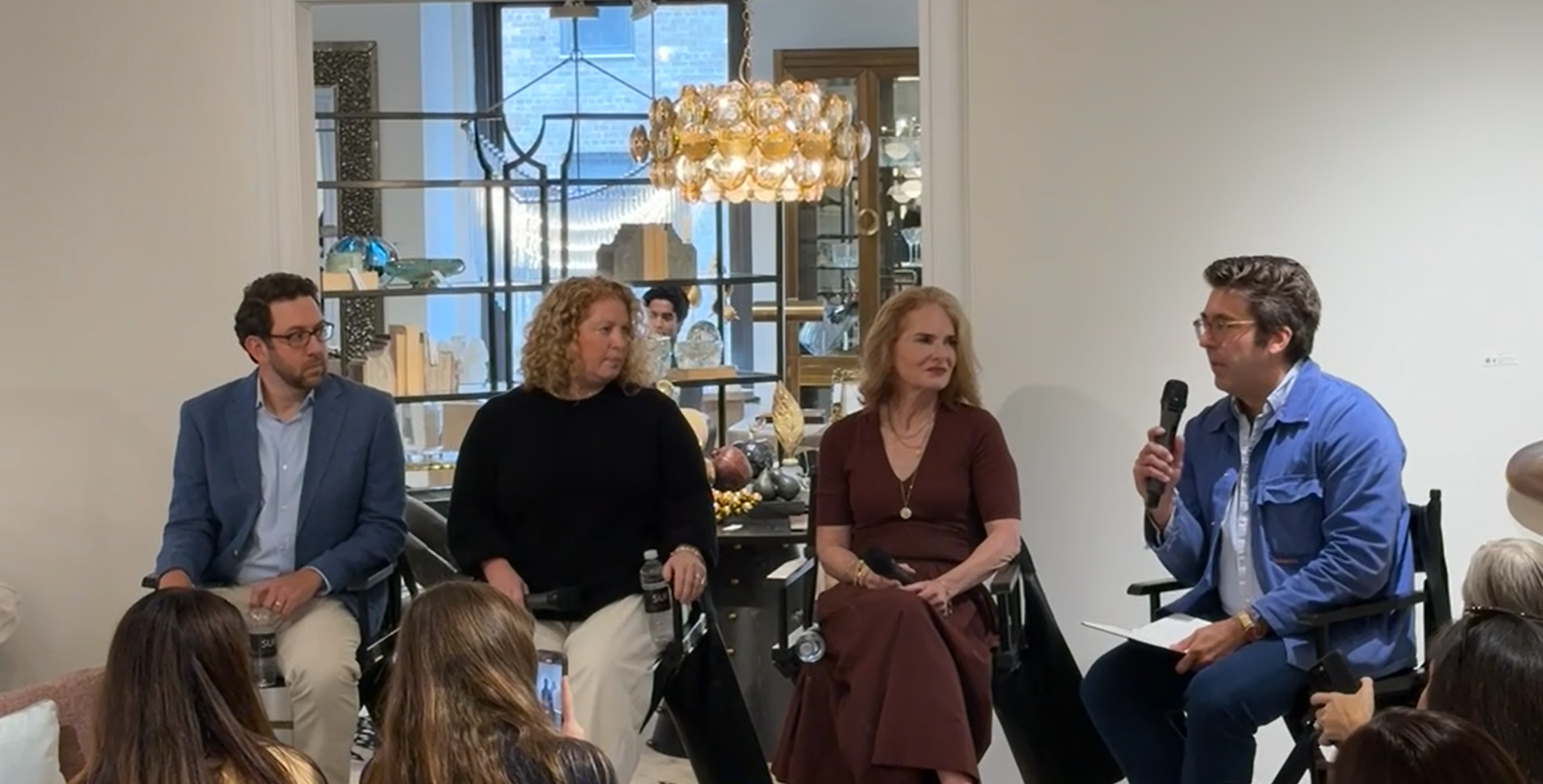
At this year’s What’s New What’s Next event, Workshop/APD Managing Director of Operations Alex Dunham joined Business of Home’s AI-Powered Design Landscape panel, exploring how artificial intelligence is beginning to shape design practices. The conversation brought together perspectives from firms of different scales, touching on everything from everyday efficiencies to client expectations, authorship, and the role of human judgment as these tools continue to evolve.
For Alex, the discussion also raised questions that are increasingly relevant to Workshop/APD how technology can make the knowledge already within a growing firm easier to access, where custom tools can improve existing workflows, and what designers can do with the time those efficiencies create. Explore Alex’s top takeaways from the conversation below.
What stood out to you most from the panel?
It’s interesting to consider how differently firms are approaching AI – particularly based on size. While smaller practices may use it primarily for individual tasks, a larger scale creates opportunities to think more broadly about how technology can help teams access information and knowledge across the firm.
How does Workshop/APD’s scale change the way we can think about AI?
The opportunity is less about giving each person an AI assistant, and more about making shared knowledge easier to access. As firms grow, information naturally becomes distributed across teams, projects, and systems. AI can help make existing knowledge easier for people across a practice to find and use when they need it.
How does our Technical Studio fit into that conversation?
Workshop/APD’s Technical Studio gives the firm the ability to explore tools in response to specific design and operational needs. There’s value in testing where technology can strengthen established workflows while keeping the needs of the practice at the center of that process.
Were there any tools that felt especially relevant to the panel discussion?
Our own custom Image Finder was a clear example of a response to a brainstorming exercise. Traditionally, locating a particular project image relied heavily on file names and folders. Using AI-assisted search to better understand visual content can make that process more intuitive, helping teams find the right image more quickly and easily.
How is AI changing the way clients participate in the design process?
Clients increasingly have access to tools that allow them to visualize ideas before bringing them to a design team. That can be a useful starting point for conversation, but a convincing image does not necessarily represent something architecturally accurate or buildable. The designer’s role is still to interpret the intent behind an image and translate it into a thoughtful, achievable solution.
What new considerations come with that increased access?
The panel raised questions around privacy, ownership, and authorship, as AI becomes more integrated into design. We want to emphasize the importance of being thoughtful about what information is appropriate to share with AI platforms, and how those tools are used within a professional practice. The conversation also touched on authorship as AI makes it easier to alter or reinterpret existing design work. Rather than serving as a simple answer, this is as an evolving issue that designers, clients, and the broader industry will need to navigate as the technology develops.

Where does human judgment remain most important?
AI is most effective when the person using it already understands what a successful outcome should look like. Experience allows designers to evaluate results, recognize when something is wrong, and direct the technology with greater precision. As these tools become more accessible, preserving the experiences that help emerging designers build that judgment becomes even more important. Technology can support parts of the process, but it cannot replace learning how buildings come together, working through complex design problems, or developing the instincts that come with practice.
Does greater efficiency automatically lead to better design?
Not necessarily. While AI can reduce the time required for certain tasks, the more meaningful question is around what designers choose to do with the time they gain. Rather than simply producing more, that efficiency can create room to study a detail more closely, explore another direction, learn a new skill, or give an idea more time to develop. In that sense, technology can support the design process by creating more space for the thinking that technology cannot replace.
What do you see as the larger opportunity for Workshop/APD?
As AI tools become more widely available, access to the technology itself is unlikely to remain a differentiator. There is greater value in how a practice applies it identifying real needs, developing useful tools, and directing the efficiencies they create back toward stronger design thinking. For Workshop/APD, that means continuing to experiment through the Technical Studio while remaining thoughtful about where technology can meaningfully support the work.