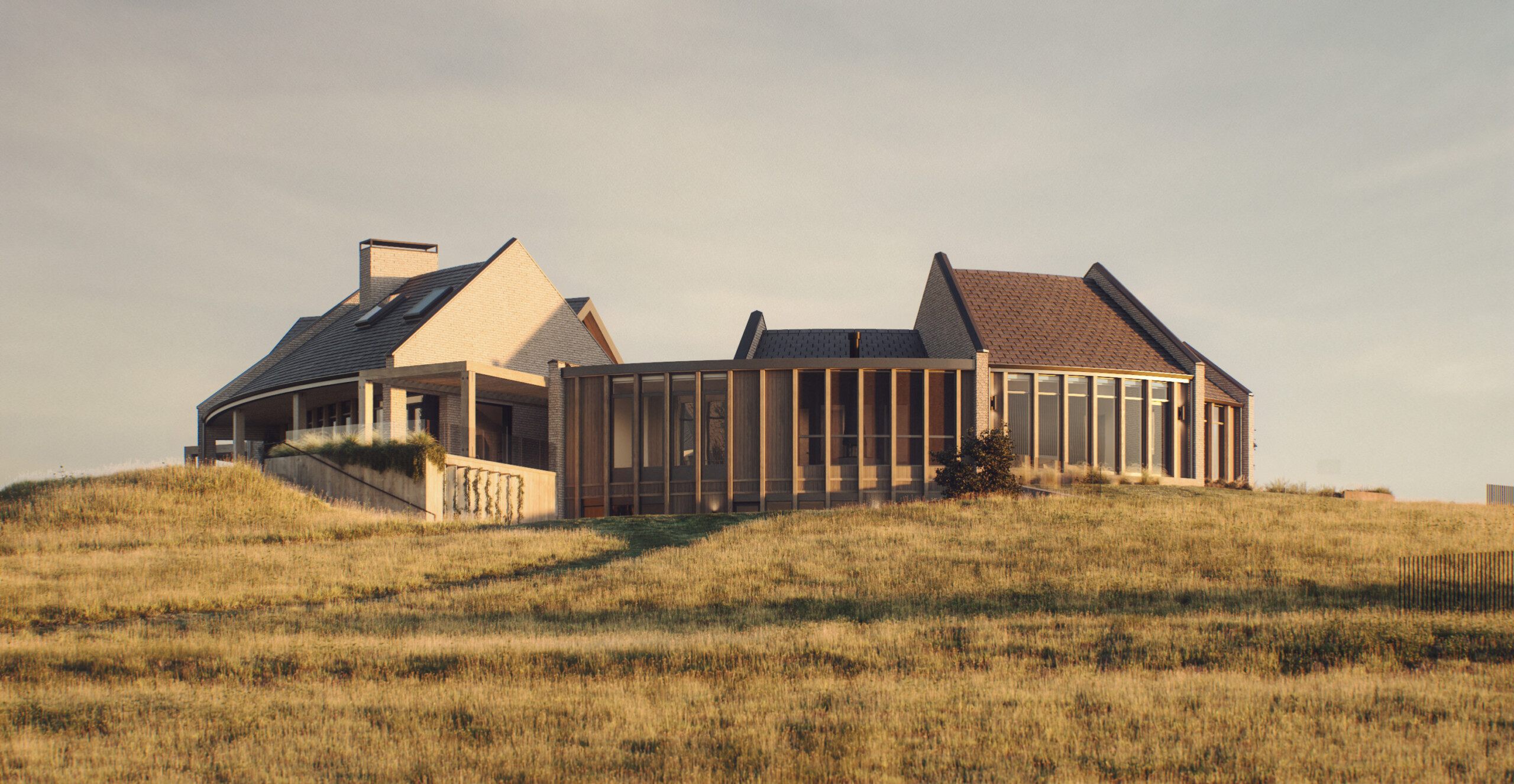
In the Workshop with Abe Ahmad & Sheryl Peng
June 08, 2026
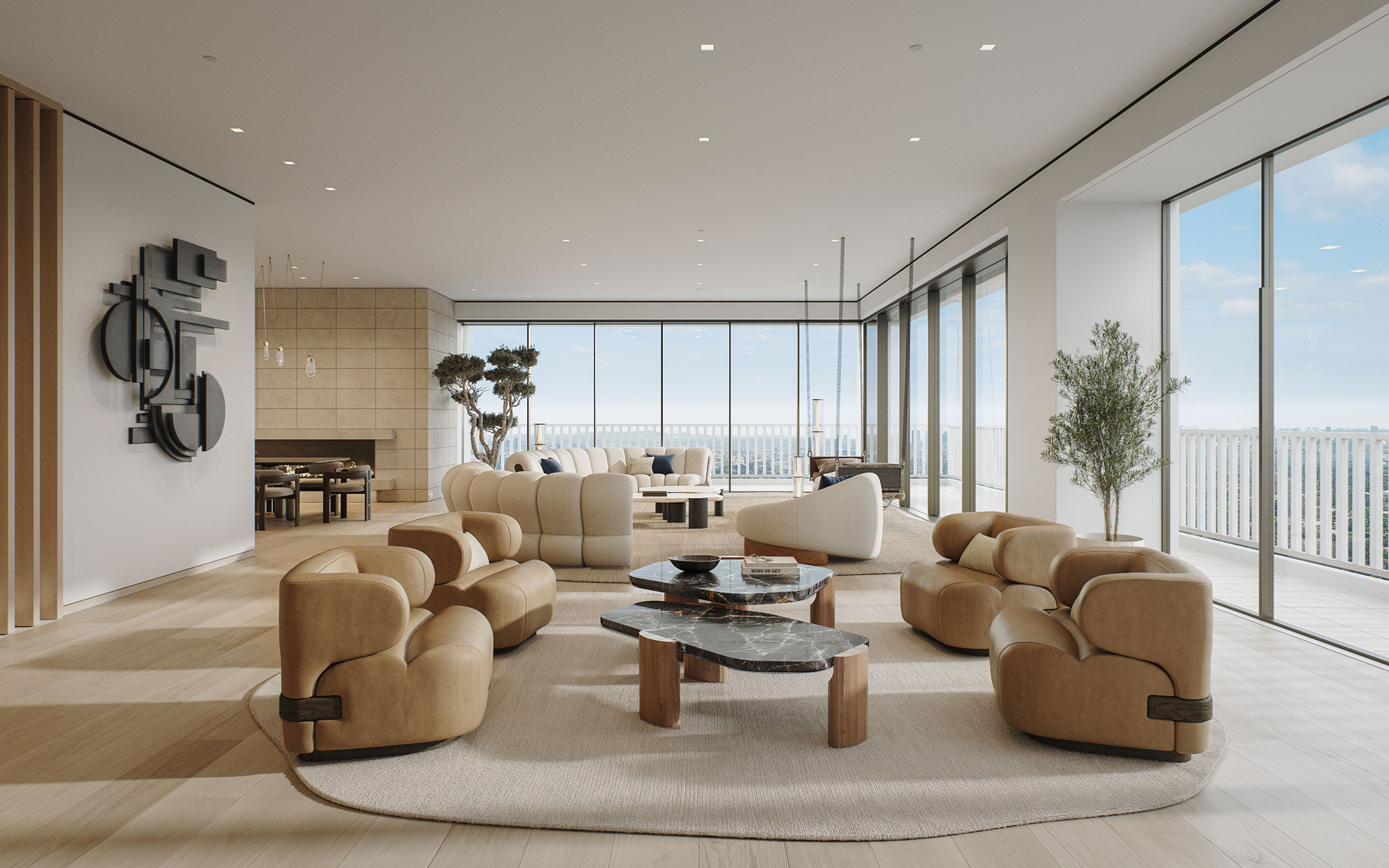
Welcome to another installment of In the Workshop. This time, we’re talking to two designers whose roles stand alone amongst our architecture and interiors studios. Sheryl Peng leverages her natural artistic talent to create stunning assets for both the firm and its clients. Senior Visualization Specialist Abe Ahmad is an indispensable renderer who brings models to life through astonishingly realistic visuals. Read on to learn all about these content-creating phenoms.
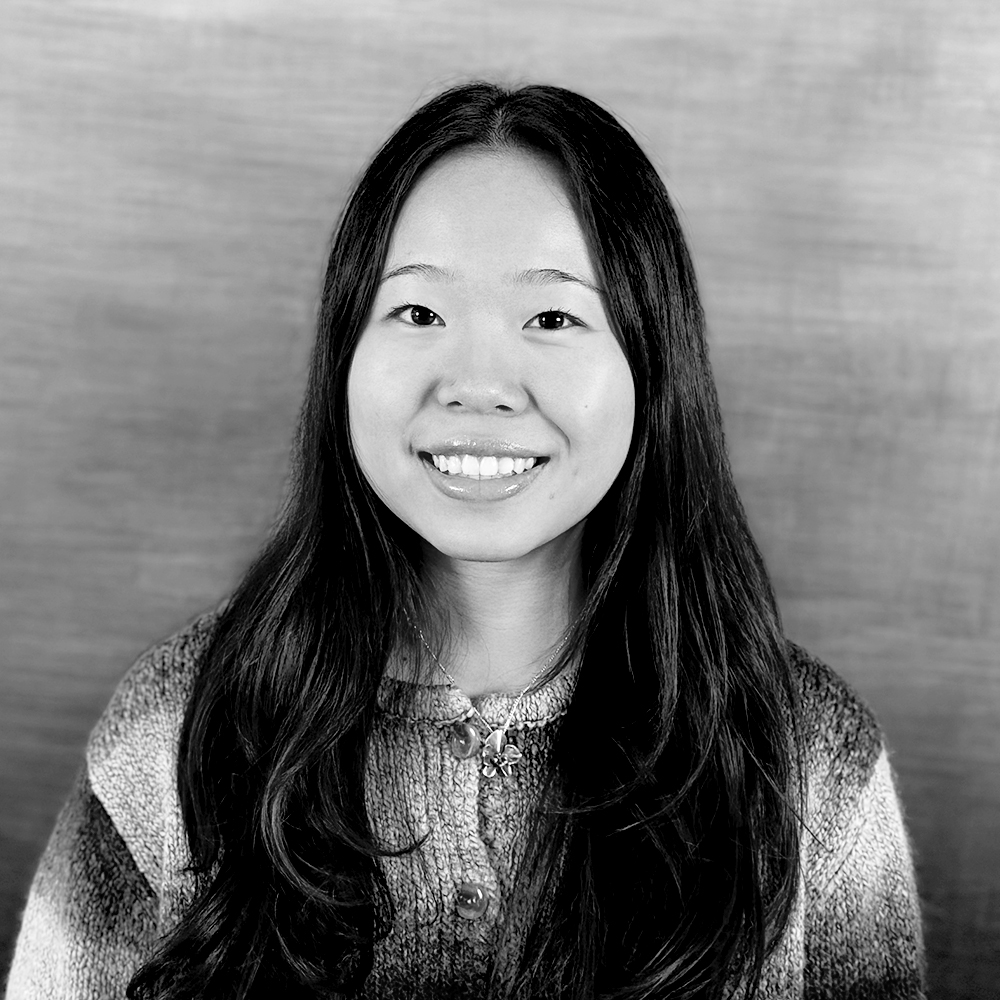
Sheryl Peng
Brand Designer
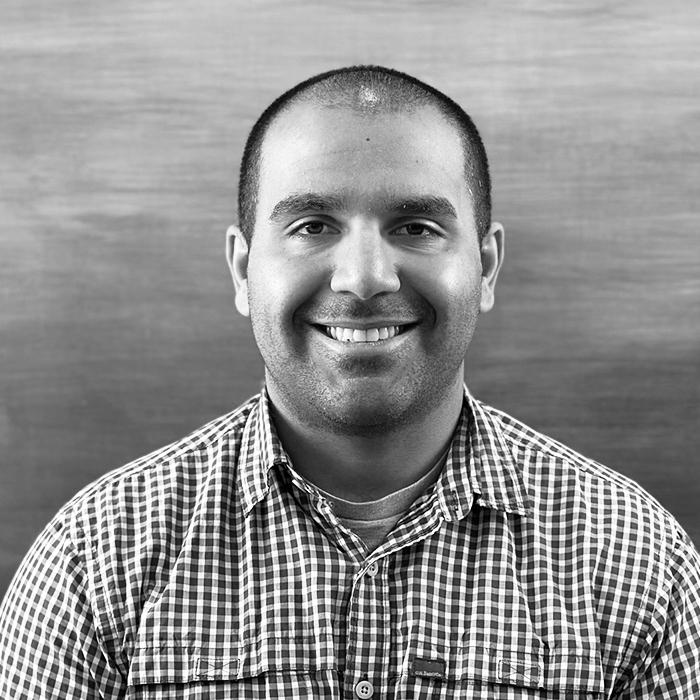
Abraham Ahmad
Senior Visualization Specialist
- When did you know you wanted to become a graphic/3D designer?
- Sheryl: I’ve always been creative and started taking art classes at four years old. Looking back, my favorite school projects were always presentations because I loved designing my own layouts instead of using templates. In high school, I took graphic design classes and later applied to design programs for college. Once I got to Boston University and took my first real design class sophomore year, it immediately clicked. I loved how graphic design combined creativity with logic and systems thinking the perfect balance of left and right-brain thinking.
- Abe: I’m glad you said it that way, Sheryl – because I kind of found my creative path organically too. I started learning Autodesk 3ds Max when I was in middle school. I was playing video games and trying to teach myself how to design my own levels. Fast forward to college: I decided to study architecture. But while everyone was modeling in Revit, I hated it, so I started doing my work in 3ds Max. I started developing that skillset so I could eventually turn it into my job.
- What’s the best rule of thumb you learned in design school?
- Abe: In my workflow, I always stay curious – good ideas & techniques can come from anywhere. For example, just this week, I saw something on Reddit for a software I don’t even use, and I applied it to my own software. It worked perfectly.
Sheryl: The biggest thing design school taught me was the value of process and research. Good design isn’t just about making something visually appealing; it’s about understanding why you’re making certain decisions. Research gives design meaning and direction. I also learned that the best work is “sticky”; it stays with people because it connects to something emotional or familiar in their experience.

- How did your previous experience lead you to WAPD?
- Abe: When I landed my first gig doing architectural visualization, it was all about figuring out how to actually do the workflow: working with architects, understanding their vision – it was baptism by fire. Everything was coming at me at once. I had a lot of long nights of “why is this not working?” But I also learned that if given enough time, I could figure anything out. Once I felt like I had gathered all of the specialized experience i could in previous roles, I came to Workshop/APD to become more of a generalist. Here, every day is filled with different projects. I never know what I might end up doing or for whom.
- Sheryl: My path to Workshop/APD felt very linear in the best way. In college, I worked with startups through a design lab at the Harvard Innovation Lab, where I got my first real experience with branding and client work. That led to freelance projects across industries, helping me build both my portfolio and confidence as a designer. I also interned at a WPP content marketing agency, where I learned to work within strict brand guidelines. Those experiences helped me realize I wanted to focus on intentional, systems-driven brand design which ultimately led me to Workshop/APD.
- What helps with your creative ideation stage? Where do you start when you get a new project?
- Abe: Usually if it’s an architectural project – for example a Nantucket home. A team has already worked on the project for months before me it gets to me. I use the mood boards the designers have created, grab those images and put them in a document to sort through them. I’m trying to assist the designers in showing their work, so I need to understand what look they were going for and then find a way to translate that vision into my own medium. I also see cool renderings on Behance or Instagram, and I’ll save those in case for reference. I’ll push to do certain styles if I believe they will look better, but I’m ultimately here to be a team player so I won’t push people too hard.
- Sheryl: A lot of my inspiration comes from outside of design itself music, movies, books, food, and conversations. I think being a good designer means staying present and noticing the world around you. I keep an archive of photos and references from everyday life, so I often look through my own camera roll before Pinterest. Research is also a huge part of my process. If I feel stuck creatively, it usually means I haven’t learned enough about the subject yet. Once I understand the deeper story behind something, the design decisions start to come naturally.
What’s your favorite design tool and why?
- Abe: It’s got to be 3ds Max. I’ve used it for so long. Whenever it updates to the latest version, I run 30 scripts just to set up my workspace because it’s so customized to me. Even when I start sketching something by hand, I’ll give up if it doesn’t look how I want and just start in 3ds Max.
- Sheryl: Definitely InDesign. I love editorial systems, grids, typography, and structure, so it naturally clicks for me. A lot of people find it intimidating at first, but once you understand it, it’s incredibly systematic and forgiving. I’m drawn to programs with structure and rules, which is why Illustrator can sometimes feel too open-ended for me. I also enjoy motion design because it makes content feel more alive, but typography, layout, and design systems will always be my foundation.
- What’s your dream project?
- Sheryl: I’d love the opportunity to create a brand identity for an exhibition or creative community event. I’m especially inspired by projects that bring together artists from different disciplines there’s something really exciting about seeing one idea interpreted through different mediums. I think that kind of collaboration keeps visual culture fresh and alive. I also love that exhibition and event design extends beyond graphics into spatial and experiential design, creating opportunities for immersive world-building and storytelling.
- Abe: A super 3D virtual reality immersive experience. I wouldn’t just be making still images or videos but a whole experience, even adding soundscapes, like the sound of a door opening. It could be any space – maybe that restaurant Becca was talking about.
- Where can we find you outside of the office?
- Abe: When I’m not walking my dog, I’m usually at home tinkering with stuff. I always have a side project going: learning a new AI tool, building something or taking something apart. I just got an engineering box that’s sort of like an adult Lego set – you assemble and code it.
- Sheryl: Outside of work, I’m usually outdoors or finding new things to try. I grew up in a very outdoorsy family, so I’ve always loved hiking, skiing, paddleboarding, and spending as much time outside as possible. I’m also really into live music, thrift stores, coffee shops, line dancing honestly, almost any random activity that sounds fun. I rarely say no to new experiences because I love learning new skills and getting better at things over time.